Understanding RT5880 PTFE PCB: An Overview
The RT5880 PTFE PCB (Printed Circuit Board) is a specialized laminate material that plays a crucial role in high-frequency electronic applications. With increasing demands for efficiency and performance in various industries, understanding the characteristics and advantages of RT5880 can provide valuable insights for engineers, designers, and manufacturers. This article explores the specifications, applications, design considerations, manufacturing processes, and future prospects of the RT5880 PTFE PCB, highlighting its importance in the evolving technological landscape. When exploring options, RT5880 PTFE PCB provides comprehensive insights into the latest innovations and applications in this domain.
What is RT5880 PTFE PCB?
RT5880 is a type of PTFE (Polytetrafluoroethylene) laminate developed by Rogers Corporation, known for its low loss properties and high thermal stability. It is specifically designed for high-frequency and microwave applications. The substrate is reinforced with glass fibers, enhancing its mechanical strength while maintaining critical performance attributes necessary for RF circuits.
Key Properties and Benefits
- Low Dielectric Constant (Dk): With a dielectric constant of 2.20, RT5880 minimizes signal loss, making it ideal for high-frequency operations.
- Low Loss Tangent (Df): The material exhibits a low loss tangent of 0.0009 at 10 GHz, ensuring efficient signal transmission.
- High Thermal Stability: RT5880 maintains its properties over a wide temperature range, supporting applications in extreme conditions.
- Excellent Fabrication Characteristics: Easy to process and fabricate, it supports various PCB manufacturing technologies, including microstrip and stripline designs.
Comparison with Other PCB Materials
When comparing RT5880 with other RF PCB materials, such as FR-4 or other PTFE variants like RT5880LZ, it becomes evident that RT5880 excels in specific applications. Unlike traditional FR-4, which has a higher dielectric constant (typically around 4.5), RT5880 significantly reduces dielectric loss and provides superior performance at microwave frequencies. Its unique properties make it a preferred choice for applications where signal integrity is paramount.
Applications of RT5880 PTFE PCB
High-Frequency Communication Systems
The demand for high-speed data transmission has led to the widespread use of RT5880 in communication systems, including cellular networks, satellite communications, and broadband technologies. Its low loss characteristics support high-frequency signal propagation, making it essential for maintaining performance in modern communication infrastructures.
Radar and Microwave Technologies
RT5880 is extensively used in radar systems due to its exceptional properties. It is suitable for fabricating antennas and microstrip circuits that operate at microwave frequencies, where stability and low loss are critical parameters. The reliability of RT5880 in these systems contributes significantly to the effectiveness of military and civilian radar applications.
Consumer Electronics
Even in consumer electronics, the importance of high-frequency circuits has grown with the rise of smart devices and IoT applications. RT5880 PCB is used in devices such as RF amplifiers, wireless charging pads, and Bluetooth modules, where performance and energy efficiency directly impact user experience. Its properties facilitate the development of smaller, more efficient devices without compromising on performance.
Design Considerations for RT5880 PTFE PCB
Thermal Management Strategies
Effective thermal management is essential in high-frequency applications to prevent overheating and ensure reliability. When designing with RT5880, engineers must consider factors such as heat spreaders, thermal vias, and appropriate layout strategies to manage thermal loads effectively.
Design Guidelines for High-Performance Applications
To maximize the performance of RT5880 PCBs, designers should follow specific guidelines:
- Maintain proper trace widths and spacing to minimize parasitic capacitance and inductance.
- Utilize ground planes effectively to enhance signal integrity.
- Incorporate via technologies that minimize signal degradation.
Common Challenges in RT5880 PCB Design
Despite its advantages, designing with RT5880 presents challenges, such as:
- Cut Material Costs: High-quality RT5880 materials can be more expensive compared to standard PCB materials.
- Complex Fabrication Processes: Specialty handling and processing conditions are required to maintain performance characteristics.
- Signal Integrity Management: Engineers must ensure proper designs to mitigate reflection and transmission loss.
Manufacturing Processes for RT5880 PTFE PCB
Quality Control Measures
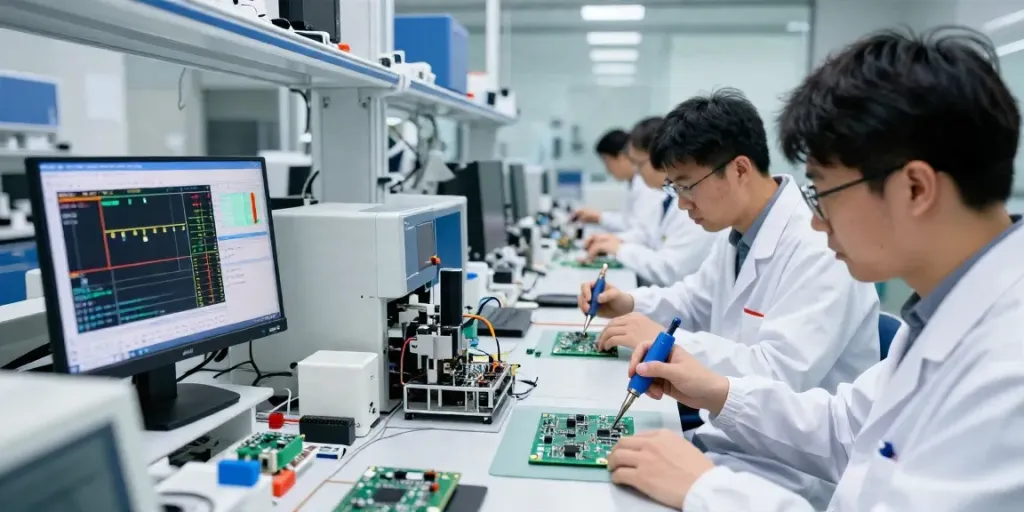
Quality control in the manufacturing of RT5880 PCBs is paramount to ensure reliability and performance. Measures include thorough inspections at various stages of production, from material selection to final testing, to ensure that specifications are met consistently.
Latest Manufacturing Technologies
The advancement in manufacturing technologies has greatly enhanced the scalability and quality of RT5880 PCB production. Techniques such as automated PCB assembly, advanced laser cutting, and precision drilling are becoming standard practices, improving efficiency and reducing production costs.
Cost-Effective Production Techniques
To remain competitive, manufacturers are exploring cost-effective production techniques that do not compromise quality. Utilizing economies of scale, implementing just-in-time manufacturing philosophies, and adopting advanced materials research can significantly lower production costs while enhancing performance.
Future of RT5880 PTFE PCB in 2026 and Beyond
Emerging Trends and Innovations
The future of RT5880 in PCB applications is promising, with ongoing advancements in material science leading to innovations that improve performance even further. Developments in dielectric materials, for instance, promise to enhance RF performance and thermal stability even more.
Regulatory Standards Impacting Production
As regulations surrounding electrical safety and environmental impacts become stricter, PCB manufacturers must adapt to comply with these standards. The RT5880 PCB will need to evolve in response to these regulations, ensuring that it meets safety and sustainability requirements without sacrificing performance.
Market Predictions and Growth Opportunities
Market predictions indicate that the demand for high-frequency PCBs, including RT5880, will continue to rise, driven by growth in 5G technology, IoT devices, and advanced radar technologies. Manufacturers who invest in research and development will likely secure a significant market share in this expanding sector.
How to Navigate Industry Changes?
To navigate the ever-changing landscape of PCB manufacturing, companies should focus on continuous learning, adopting innovative technologies, and staying abreast of market trends. Collaboration with research institutions and participation in industry conferences can provide insights into upcoming challenges and opportunities in the field of RT5880 PTFE PCBs.